Hollyhock 3

This post will be a collection of my last experiments this time round. Nothing special, just to wrap it up as, well as being the only kind of documentation I seem motivated to do for my dyeing…

* * *

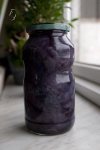
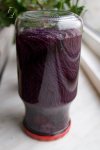
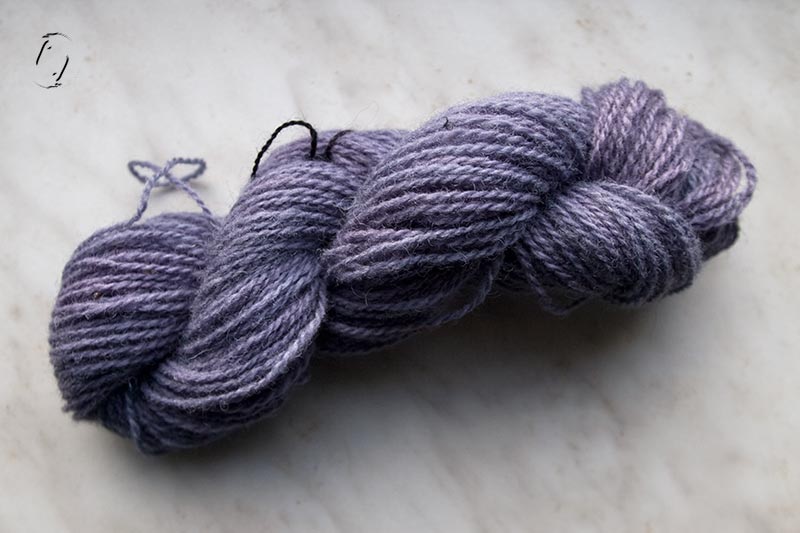
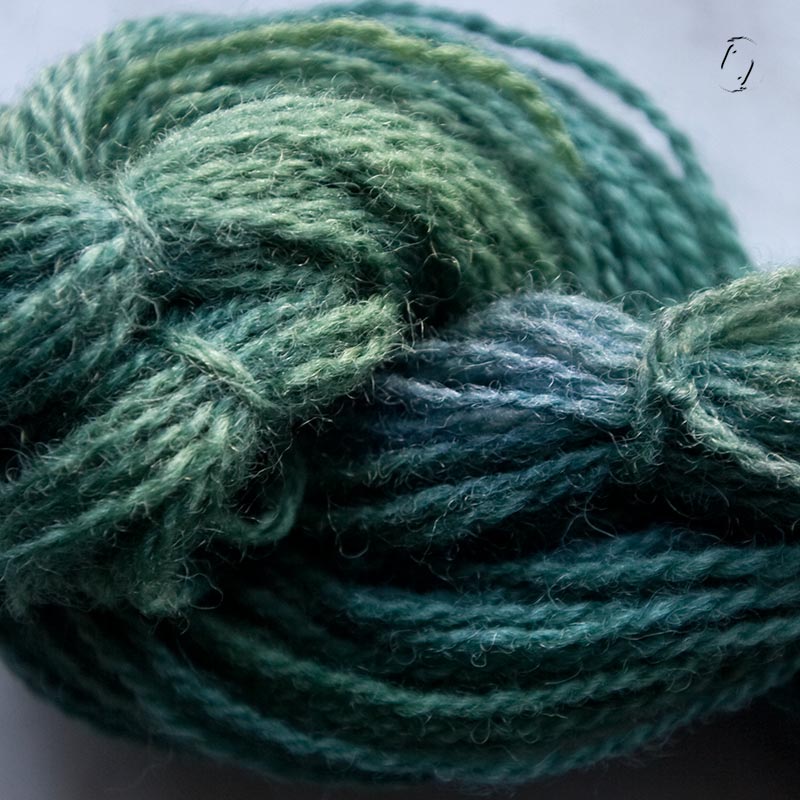
I took the very acid jar, strained the flowers, crammed the jar with fleece undtil it was all soaked up, then I filled the jar until it was full and topped it up with the “no longer alkaline” liquid from the blue skein. Since that was already done from exhausts, there was not much juice left, but I wanted to see if I could create a “rainbow” jar or if it would all eventually intermingle to one shade. And this did indeed happen. On the last night the jar was still variegated in looks, red, purple, brown, but in the morning when I wanted to empty it, all purple. The biggest surprise came when I put half of it into ammonia. It didn’t change AT ALL!? No green. WTF? So despite having measured the water to pH 10, I held my breath and added another glug of ammonia. And got grey…. Leaves me wondering if the tin mordant makes the purple more stable?
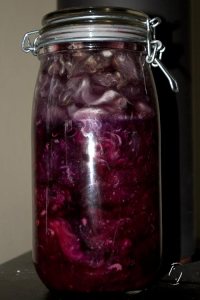
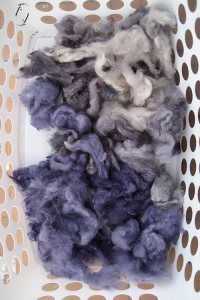
hhock22 hhock27

Then I put the very sour flowers from above into a new jar and topped with rain water to see how much juice they had left. Start pH 3 just from the acid in the soaked flowers. Put it on stove shelf, they did indeed contain more dyestuff. pH 3 while hot. Added too much fleece so topped with rainwater, pH 4, very pale pink. Back on the shelf because I had trouble with the set below and wanted to heat test the fleece in dye, even a weak one, before adding the rest of the fleece to a new bath in the canner.

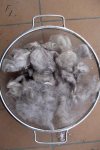
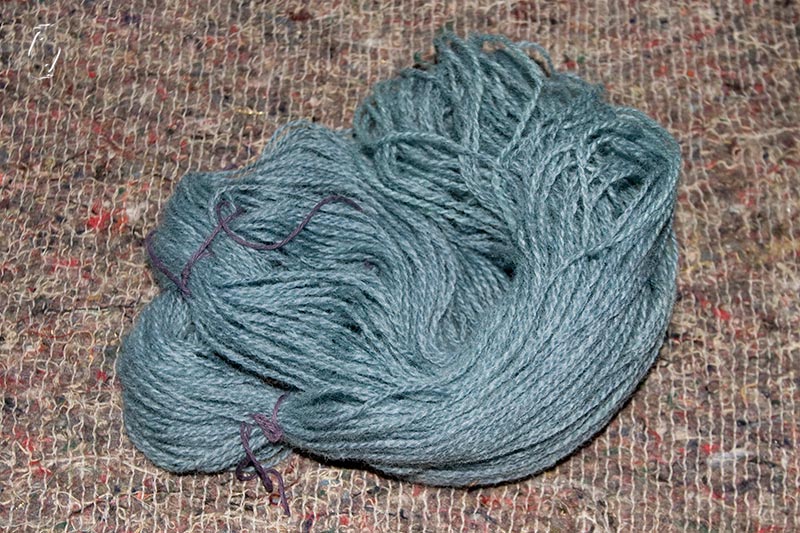
As I mentioned in connection with the pink skein, the heat in itself seems to alter the dye to purple despite the pH. When it was done, it ended up silver grey and it’s the first time I’ve seen a plant dyebath exhause completely. Absolutely clear water left when I took the fleece out! The flowers themselves were also done for, 1st image below is flowers after the last extraction.
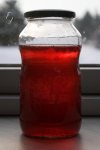
hhock21 hhock20 hhock19 hhock28

* * *

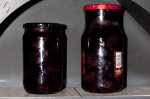
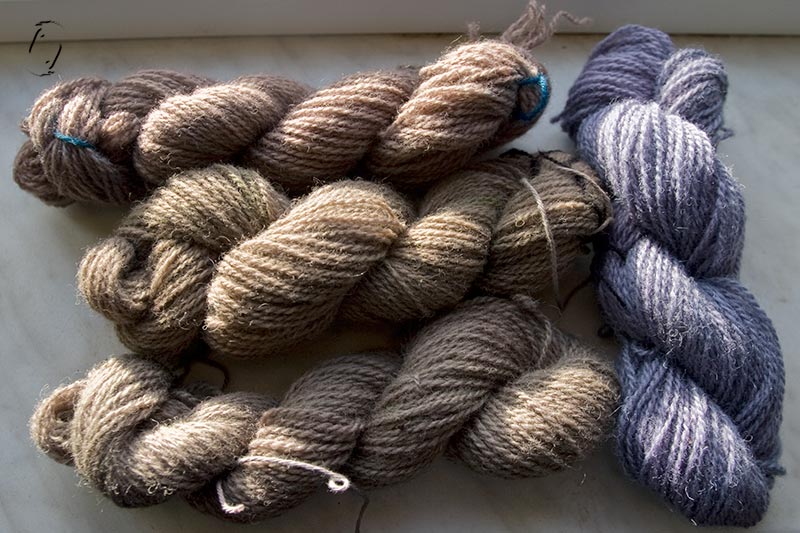
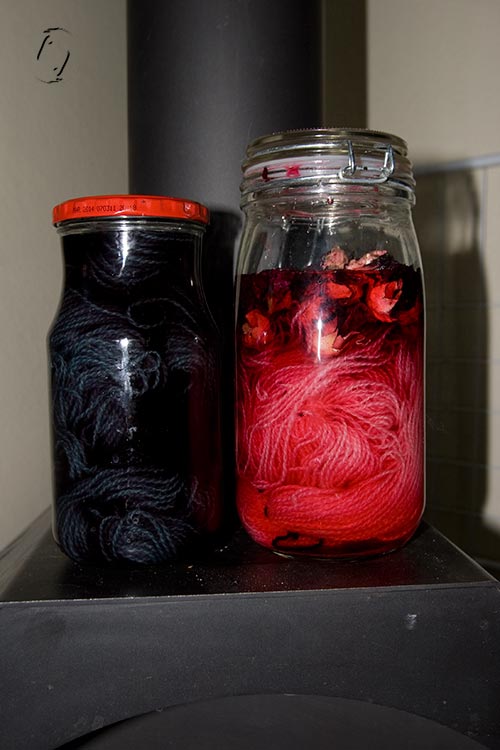
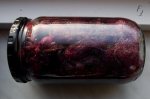
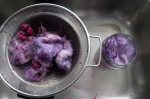
The Teaser jars: I emptied them after 3 days instead of weeks, as it looked like they were as dark as they could get and just beginning to alter their shade. Turns out, the fleece wasn’t really taking the dye. Whether due to my previously unresolved issues with Dorset or the cold method, hard to tell since no yarn was in there with it. I put it back.
hhock24 hhock23 hhock31

Wait 10 days, still in the window, temps 15-20 C. Very dark liquid, fleece rinsing out nearly white. Mould on top of the rainwater jar, the vinegar jar keeping fine. Time for a quickie on the shelf. That helped, so while cold water does extract the dyestuff, I don’t seem able to make the wool take it at low temps. Also, the flowers didn’t exhaust, they were still dark as ever. (more water might be the solution to that)
hhock30

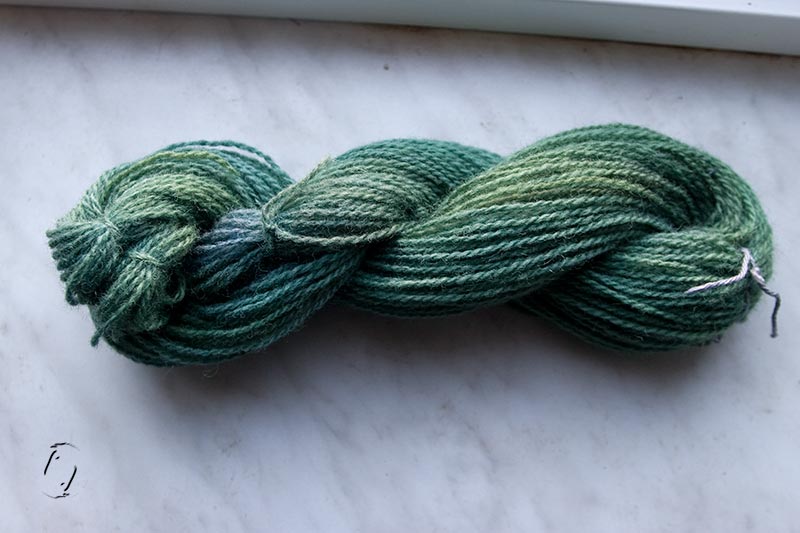
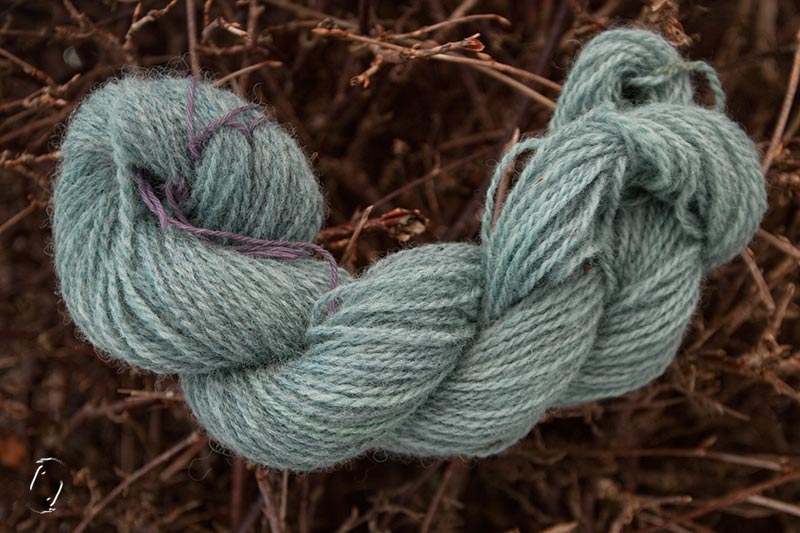
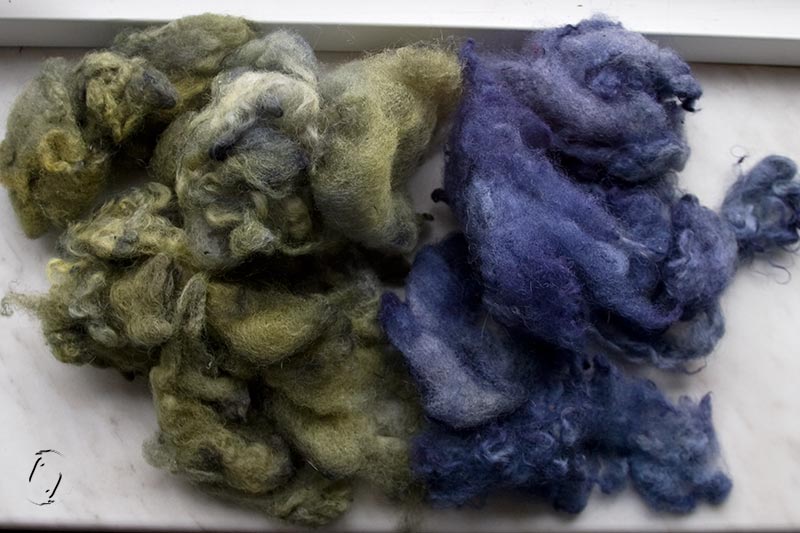
They were so close in colour at the end, even though one was in pure vinegar, that I poured some ammonia directly onto the rainwater batch as it was sitting in the sink, then immediately hosed it with water. And, well, green again, even though there was tin in there. So I still have no clue what happened with the other batch refusing!

* * *

I used a total of 150 g flowers for all experiments, 280 g yarn and 195 g fleece.

* * *

Polled Dorset. Scoured, dyed at pH 7,  ammonia pH 9, vinegar pH 2. Iron afters for all. Mordant tin/alum/CoT. Temperature: 60. Well, that was my plan for the remaining fleece. But then I suddenly couldn’t be bothered. So there. I still have some undyed Dorset. And no drumcarder. Spacebags? Fir cones? (yes) Madder? (yes)

Hollyhock 1
Hollyhock 2
Hollyhock 2½

≈ Leave a Comment

Stokroser 3

Et par smÃ¥ resteprojekter med stokroserne pÃ¥ tin-bejset dorset uld, noget af det farvet “lunkent” pÃ¥ brændeovnen, noget forsøgt koldt i vindueskarmen, men selvom det sidste trækker farve ud af blomsterne, sÃ¥ sætter det sig ikke pÃ¥ ulden.

Jeg kunne ikke få den grønne farve frem denne gang, ved ikke om det evt. er tinnet der holder på det blå-lilla.
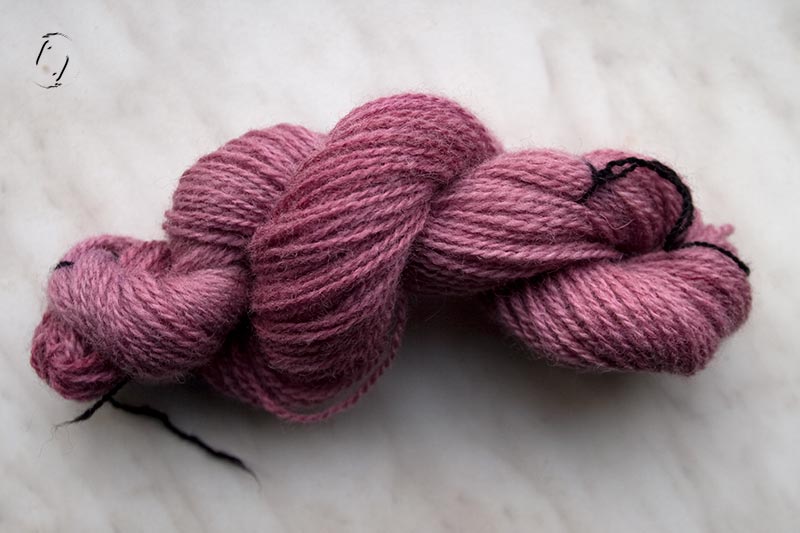
Pinky

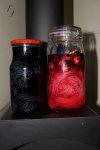
hhock10Remember this jar on the right?

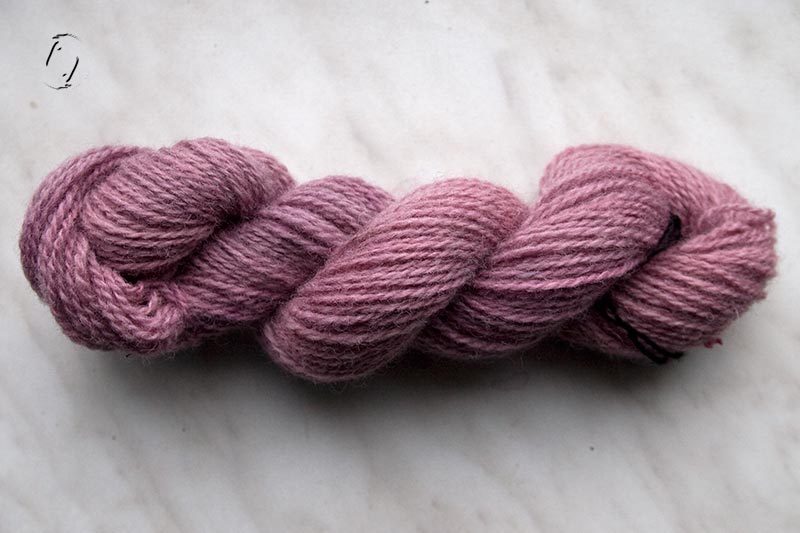
It was eventually done cooking on the stove. 2 days like the other 3 skeins, ph 2, as high as I managed to get it. Pure vinegar with some acetic acid. I measured again when done and it was closer to 1.

I was very excited to see if it would keep its rose tint during the dye process and of course after. Well, here you go:

hhock25
Dry skein reeking of vinegar
hhock26
Skein rinsed then dried again.

Unfortunately it seems that rinsing out the vinegar will push it towards purple once it dries. Even if there is actually a bit of vinegar in the 2nd rinse water. OR it could be heat. See, I wanted to wrap up this post and put the yarn close to the stove. The most wet ends turned more purplish than the rest before I noticed and moved it. Sic! So, heat definitely pushes it towards purple. As well as time.

I meant to do another skein in there upping the ph slightly – but I lost steam, didn’t get to mordant more yarn, and, well.

I’m going to re-photograph all the skeins later, as they do seem to change a bit after curing. I also don’t always rinse them until they’ve dried and rested for a bit.

And here they are:
hhock29

* * *

Dre asked me about pH change during the process. I did not measure at each temperature shift, but the juice in the above photos, which started out at 8 and 2, are now 6 and 1 (or that’s as low as my strip goes). The two jars in the window however have not changed since I made them, they’ve been in temps between 15-20 C.

Just for fun I think I’ll stuff some fleece in the highly acidic jar, then afterwards dip it in the former alkaline jar. Which is now no longer alkaline, where did that ammonia go?!

Fun fact which unfortunately I wasn’t allowed to document: when I hung the pink skein to drip in the shower (white floor), the splash pattern was pink in the middle with a larger ring of drops around it, they were indigo blue! As well as the run off between the tiles, dark, dark blue.

Anyone care to take a guess at what happened there and is it related to the pink/purple issue of the finished skein?

Daily doodle

It’s all the rage on creative blogs – a post a day, a collage a day, a journal page a day, a photo a day, a heart a day, 365 days challenges.

poodle
A Dpoodle a today.

And it makes sense, if you want to keep the flow, get in the groove. You need to show up every day and do your thing. For a long long time I didn’t, I let life run me over, I was exhausted and kept saving my ideas for tomorrow. “It’ll soon get better, and then…” turned into years… But I’ve learned recently, if I want to get it done, I need to get started. No matter what life looks like today.

Being me, I do know however that a fixed project commitment every day doesn’t work for me. Making it a duty, heck, that’s why I became self-employed so I wouldn’t have to show up on time for somebody else’s gig, you know, the sun is shining, perfect time to go riding at 11 am! (or paint – don’t get many hours in winter).

Besides, once I begin thinking about it, I can suddenly imagine doing a doodle a day, a written something a day, a painting excercise a day, a yarn a day, a photo a day, a knit-one-row-a-day project, a cartoon character a day, an index card sketch a day, a horse a day….. (see, I’m making lists again!)

books03

I also have a list of things I’d like to study, artsy as well as “bookish”. Schedule a day where that’s what I’m doing for xx hours a week. But I need to take it slow because I know what happens if I don’t. Multitasking is poison to the soul!

So I’m not going to commit to any one particular thing a day, because suddenly life happens and I’m off in another direction for a while. But, starting with my converted book I’ll try to show up every day and do “something”, not just gab or think about it (which I’m really good at as you’ve gathered). I have plenty of little things I want to do that are not art in themselves but preparations to make art, such as stencils for use on book pages and elsewhere. Font research. Great for days when art scares you, but you still want to feel some accomplishment.

In fact I think I may have so much fun with it that I started on its partner. I even looked for the part 5+6 that I knew I’d seen, but I’ve thrown out quite a few books over the last years, both my own, to make more room on my shelves, since I’ve reached the limit for more shelves, as well as my MIL stash that lived in the loft for a while. The stash, not the MIL. So they were gone, and recently too as I recall, when deciding I couldn’t be bothered reading them. A whole stack, same size, different designs, would have been cool though! Maybe.

books02

The covers are a work in progress. The pages I either slather with gesso, making the old paper more sturdy as well as preventing markers from bleeding through to the other side. It contains chalk, so it dries quickly and also makes a porous surface suitable for inks and watercolors. Or I sometimes use leftover paint from something else to make a little background that I can later use for collage or paint something else on top. If you add a lot of medium you allow the text to be seen through the colour, you can even use matt acrylic medium to get the same effect as gesso but keep the text. I pull out every 4-5 pages so it doesn’t get monster thick when I add all those things, the spine being the width it is.

The thing about this project is no pressure. I don’t need to get an idea to work on it, I just mindlessly add a bit of paint and maybe something likeable comes out of it. I haven’t wasted expensive paper if it doesn’t, but maybe it’ll keep me in or get me into that flow. It feels like it’s now or else – having wasted all that precious time already. So this is my way of reminding myself over and over that a new software is being installed. I’m going to drag my resistant twin kicking and screaming into the century of the fruitbat.

books04

Maybe eventually I’ll come up with something that I’d actually like to document and collect every day, for now I’m publishing my intentions so feel free to check up on me and keep me to it. 😉

In return I promise not to actually pester you with my antics daily. Maybe just a special doodle once in a blue moon?

But just to make it harder on myself, I’d like to hear your ideas for “something a day”. Do you think it’s a good idea/routine/challenge and why?

Hollyhock 2

My experiments with Hollyhock flowers continue. This time a “solar” dye technique, using variations of indoor temperatures to mimick summer.

Rainwater, vinegar, pH 4. 35 g yarn, 10 g dry flowers. Left on top of fireplace 2 days. I shook it up once in a while when taking photos of the progress. Shelf temp. 60-65 C when fired up, 40-45 C on the top of stove (where I let it remain), 15 C in the morning.

hhock05 hhock06 hhock07
30 minutes – 3 hours – 24 hours

hhock08
2 days
hhock09
compared to first batch which have faded a bit while in the cupboard…

Same procedure, pH 6-7 (my strips are not super accurate) yielded pretty much the same shade, so I took the remains of the dyebath, put in ammonia until it was way up (11+, it takes only drops….), then dunked it for a minute. Thought I might as well compare it to the “boiled green”. There are some strands that had not as much dip as the rest, they turned blue. I left them as such, for science. 😉

hhock12

hhock13

Next, both exhausts mixed and upped to pH 8, 2 days on stove. As you change the pH the dyebath pretty much changes to the colour you’ll get on the yarn, how’s that for an indicator? I had fun adding ammonia to get green, then vinegar water to make it rosy again with the last bit of dyebath before I poured it out.

hhock17
This skein is incredibly hard to photograph to the exact shade – as close as I got today in the snow.
flash photo
flash photo – always a bit brighter that life…

As you can see however, once I took it out I didn’t quite get the steel blue (left jar below) or the baby blue of the strands on the previous skein, may have left it in there too long and it got too alkaline. A safer bet if you want sky blue may be to do a neutral 6-7 pH lavender then a dip in pH 8. Maybe it takes even less to turn it.

I think I’m going to have to try and get some dark red flowers and see if they give a more rosy warm shade. I thought the acid one would be, given the heather rosy tint I got on the first project with a vinegar afterdip – maybe afterdips are different, maybe if was the temperature? As you can see the dyebath starts out very pink, then to turn purple over time. Could be a completely cold dye procedure would be different yet again. Or maybe I need to push the acid lower than 4 if we have green on the opposite end, then blue, purple in the middle and ?

Join us next week in the quest for pink, 2 more jars in this series still cooking… I’m thinking that perhaps the lavender skein was closer to neutral pH, since it was identical to the neutral one, so I’ll have to conduct another test with the exhaust from the red jar below. Meaning, I need to mordant more yarn to get reliable comparisons, meaning y’all need to wait for a bit.

hhock10

In the meantime, I’ve also mordanted the rest of my Dorset fleeces in tin/alum/CoT, about 650 g. So look out for “Hollyhock 3”. Or possibly 4.

≈ Leave a Comment

Stokroser 2

Nye eksperimenter, denne gang farvet ved stuetemperatur, dvs. jeg forsøgte at kopiere solfarvning ved at stille glassene pÃ¥ brændeovnen, det giver 40-45 grader om dagen og ca. 15 om natten. 2 døgn hver ved pH 3, 6 og 8. Den mellemste lignede grangiveligt den første, sÃ¥ den fik et meget basisk dyp til sidst og blev en flot grøn. SpørgsmÃ¥let er, om jeg har fejlmÃ¥lt pH værdien pÃ¥ det første fed, og det mÃ¥ske var nærmere neutral, dette er jeg i gang med at teste….

Jeg har brugt regnvand, men nu hvor vi har fået frost er jeg nok nødt til at bruge vandhanen, selvom det evt. godt kan give et mere gråligt resultat at dømme fra første test.

Næste test er dels tinbejset, dels helt “koldt” bad uden ovn og, nÃ¥r jeg fÃ¥r dyrket nogen, mørkerøde blomster i stedet for sort-violette. Noget tyder dog pÃ¥ at det er pH værdien som er afgørende, sÃ¥ jeg er i gang med næste test i ren eddike.