
Dusk

Author: Pia
Summer dreaming
Takes up way too much space in a small house, but I think it’s kinda neat all the same!
DYI supplies
As fascinated as I was by the garden printing technique the other day, I didn’t have any prepped canvases or cloth to try it on (and I still don’t, blame my to do list). But I wanted to do something, so off I went on a garden tour to find plants for drying and maybe using in collages. I obviously can’t show you the results yet, but here’s a glimpse of my findings. Various leaves, daisies and wild roses among other things.
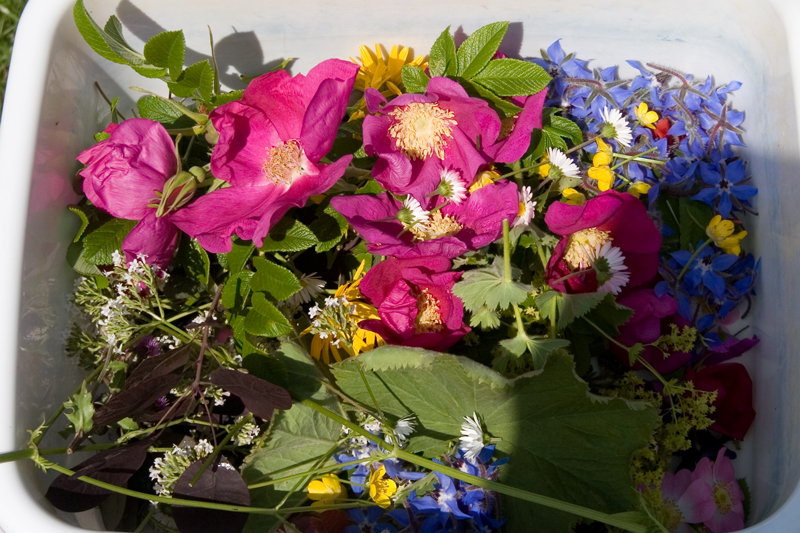
I’ve also read of a technique using fresh flowers in paintings, encasing them in gel medium. I don’t think I have the right kind in stock though, and alas, no prepped backgrounds either, so maybe next year…..
Trusting your instincts
 Do you ever go against your own intuition and do things by the book or because someone told you so with their own inner conviction – and failed? Yes, I fail when I go my own way too, but my biggest “DUH – idiot” moments are always when I did not listen to my inner voice. Maybe I was even confounded by my own logic, pushing the touchy-feely stuff aside in favour of “science”. I’m a messy methodologist, laid back nitpick kinda person. Don’t tell me what that means, I don’t wanna know.
I really wish I’d learn not to. Ok, I do learn something from some of those mistakes too, but feeling stupid always annoys me. 😉
So when Ashford sells their rainbow colour kit as scarlet (fire engine red), blue and yellow, I thought there was probably some hidden chemical secret that would make this work, although I KNOW that magenta is really the purest primary colour for blending. (in the case of Ashford dyes, this is called hot pink) Continue reading “Trusting your instincts”
Colourfastness
I haven’t been doing anything with my plant dyed yarns from last year, they’ve been sitting snug in a box and I thought it was time to pull them all out and have a look at the colours. How much did they fade? I’d already determined that wool dyed with berries and vegetables were bleached to white or beige in sunlight or when washed with laundry detergent. But what about the “real” dye plants? They’ve been in a white plastic container with clear lid, so indirect daylight, not dark, not sunny..
I’d mainly dyed 30-35 g skeins to stretch my supply while I was still playing around, not dyeing for a specific project. I think they’d make a great beeskeeper’s quilt or something similar to that. Anwyay, here they are, all of them, in a big pile (not so big actually, in my head it seems like I’d done a lot more skeins? Especially I had this idea that I was drowning in yellows).
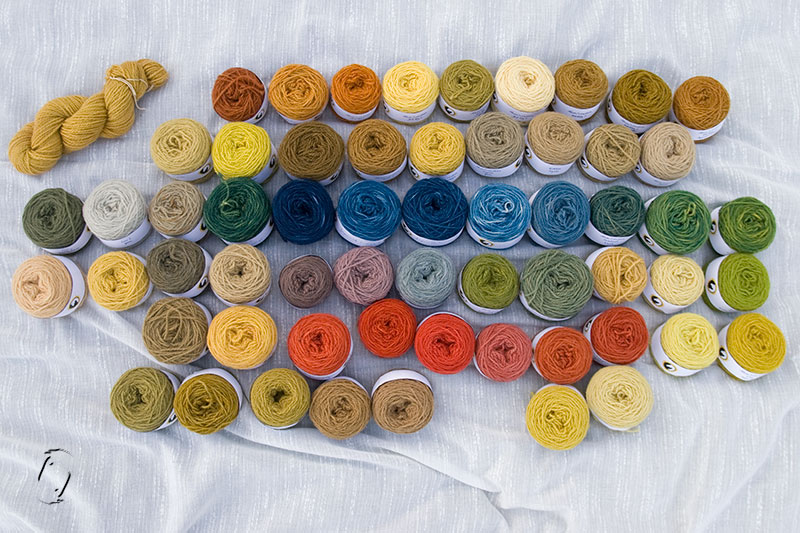
Conclusion is that most of the skeins look pretty much like they did a year ago. How they’ll look after strong daylight and in use I’ll have to wait to find out until I begin knitting with them or take the time to make a proper test with cardboard strips and the lot.
I use Spectralite when doing woad and indigo, no urine vats for me, sorry. I just don’t find it very charming to wear clothes smelling of wee. I’vealso tried cold dyeing with Japanese indigo, instructions in English and in Danish.
List of plants I tried in 2011:
Birch leaves – birkeblade
Apple leaves – æbleblade
Dandelion flowers – mælkebøtteblomster
Weld – Reseda luteola – farve-vau
Coreopsis tinctoria – skønhedsøje
Horsetail – Equisetum arvense – agerpadderok
Japanese Indigo – japansk indigo
Woad – Isatis tinctoria – farve-vaid
Lilac – syringa -Â syren
Onion peels – løgskaller
Celandine – Chelidonium majus – svaleurt
Ragwort – Senecio jacobaea- engbrandbæger
Mugwort – Artemisia vulgaris – bynke
Madder – kraprod
French marigold – tagetes
Sumak soup (leaves, bark, flowers) – Hjortetak
.
PÃ¥ dansk
Billedet forestiller det garn jeg plantefarvede med sidste år. Det ser ud som om farverne holder ret godt, selvom de dog ikke har ligget i direkte sollys, som jo er den ultimative test. Jeg har farvet små 30 g bundter fordi jeg blot ville eksperimentere så meget som muligt og ikke havde nogen deciderede strikkeprojekter planlagt, men jeg tænker at man kunne lave et fint slumretæppe af en art, dem kan man ikke få nok af i et land som vores!
En del af plantefarvningens kunst er jo at vide, hvor holdbare farverne er, selvom det også er sjovt at blive overrasket af nye resultater. Naturens farver jo næsten altid flotte lige meget hvad man gør!
Det garn jeg farvede med bær og grønsager er falmet betydeligt under samme forhold, men det vidste jeg jo godt, det var stadig sjovt at prøve. Det bruger jeg nok til grydelapper eller lign. som jo alligevel bliver ødelagt ret hurtigt. Eller også farver jeg ovenpå, måske der sidder rester af noget i garnet der virker som en art bejse og får indflydelse på næste farvelag?!
.